


24. Conferences can feel like a long haul flight… but this was like a cruise!
- Mo Hakim

- Jul 17, 2025
- 3 min read
Updated: Nov 19, 2025
Hello everyone! My name is Mo. I am a Research Assistant in the Learning Disability Research Team at Kingston University. I don’t work on The DAPPLE Project. I work on another project called The READY Study, which is about recognising dying in adults with a learning disability. You can find out more about The READY Study here.

The PCPLD Conference - 19 June 2025
Last month the PCPLD (Palliative Care of People with Learning Disabilities) Network had a conference. The conference was about: What is new in palliative care for people with a learning disability? I presented with Professor Stuart Todd from the University of South Wales who leads The READY Study, and my colleague Fred, who I work with on the project. Professor Irene Tuffrey-Wijne who leads the Learning Disability Research Team at Kingston asked me to write a blog about my experience.
I have to be honest. I don’t normally like going to conferences. I do like meeting new people and hearing about new things. But conferences are often not inclusive for people with a learning disability. At some conferences it can be difficult to:
Feel settled in an unfamiliar venue
Know what is happening and when
Understand complicated presentations
Sit still for a long time. And I mean a LONG time. A really, really long time. After one conference, I told Irene it felt like being on a long haul flight.
The PCPLD Conference was more inclusive than other Conferences I have been to. Watch this video to see what happened:
There were some interesting presentations, but it wasn’t just presentations, there was dancing and singing too! At the request of the READY Group (the co-production group I work with on the study) we got everyone in the room dancing to ‘Let’s get Ready to Rhumble’ by PJ and Duncan. (It's our groups theme song!) Between presentations about learning disability and dying, this helped to create a lighter mood.
It was great to see so many people with a learning disability involved throughout the event: presenting, asking questions, and singing (thank you to the Baked Bean Choir!). Three members of the READY co-production group came to the conference and they all took part in the soap box session, where people were invited to talk about anything they wanted to for 2 minutes. People with a learning disability got to be part of everything that was happening. We weren’t just invited to tick a box to say we were there.
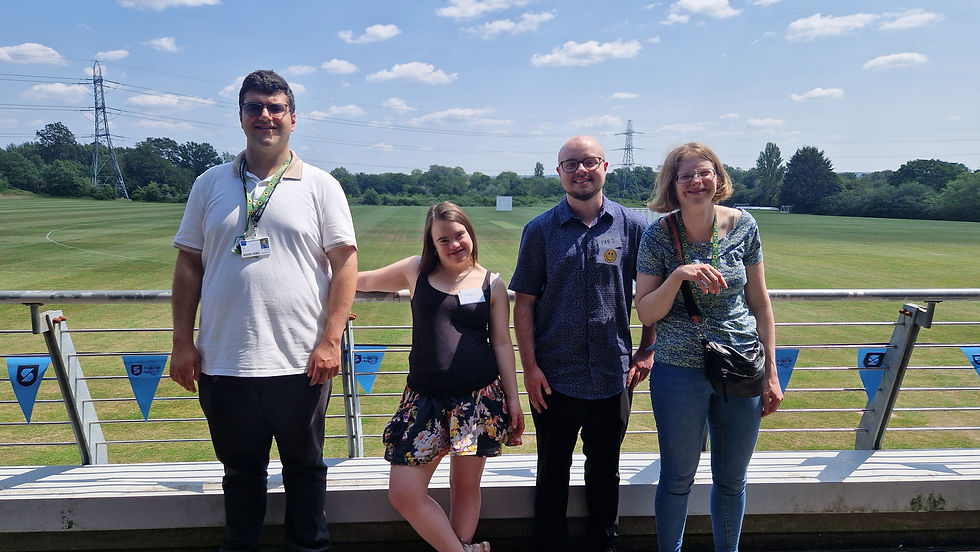
At the conference, it was ok to get up and move around if you needed to. This is something that really helps me to feel comfortable. I can stand up, move about and listen - I am still interested in the presentation. Nobody shamed me for needing to move around.
At the end of the day, Irene asked me what I thought of the conference. I said: it was like being on a cruise! I felt relaxed. I could get up and walk around when I needed to. I could have some fresh air outside. I could be myself.
Top tips for organising an inclusive conference
Here are my tips for organising an inclusive conference. What do you think of them? Are there any else you can think of?

Written by Mo Hakim, Research Assistant at Kingston University


Comments